
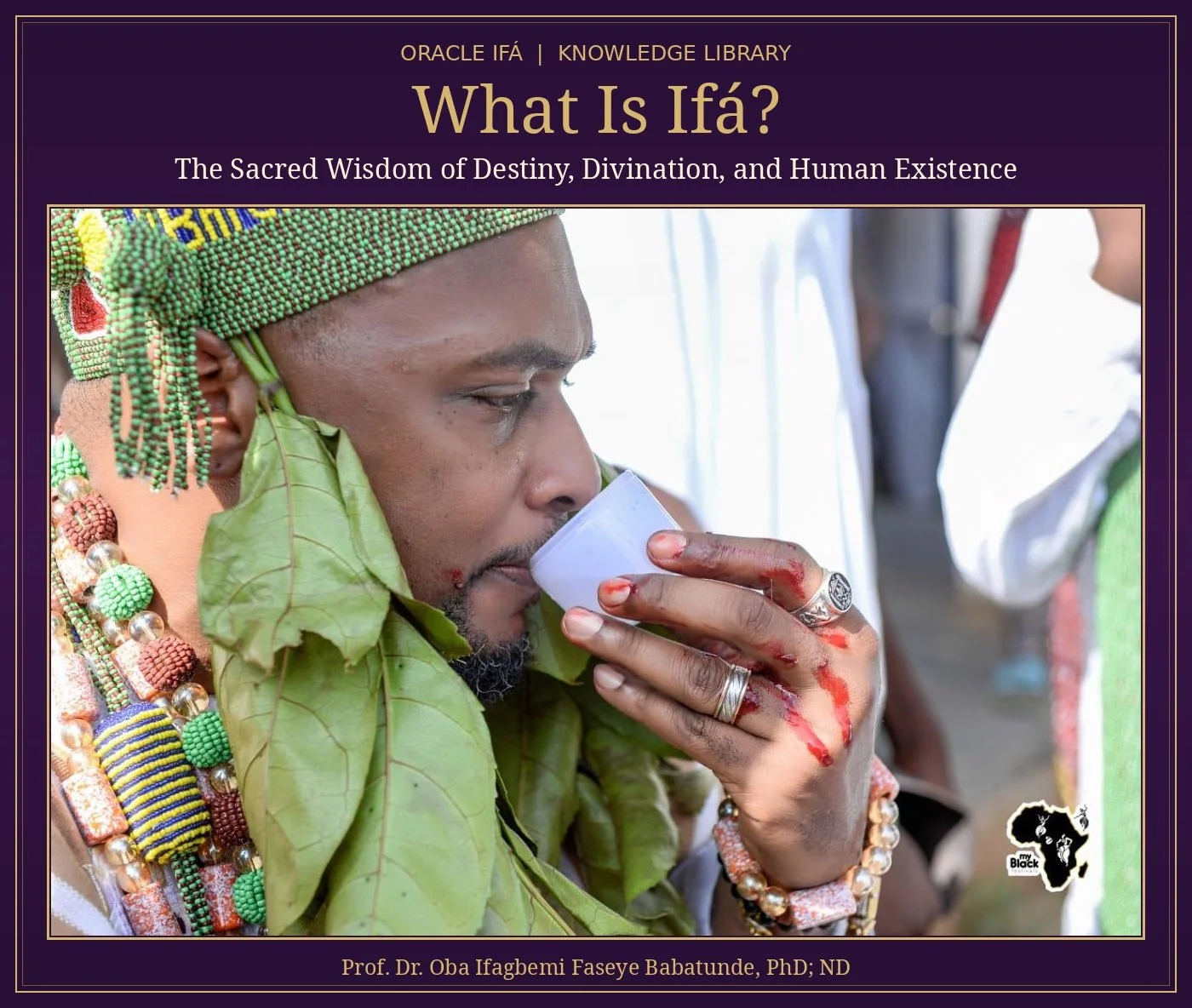
The encoded wisdom of Olódùmarè, the sacred testimony of Ọ̀rúnmìlà, and a living spiritual tradition that transcends geographical and cultural boundaries.
By Prof. Dr. Oba Ifagbemi Faseye Babatunde, PhD; ND
Oracle Ifá Knowledge Library | November 24, 2026
Adapted from Practical Foundations of Ifá: A Handbook of Ifá View and Practice, Second Edition, Oracle Ifá Press.
What Is Ifá?
Ifá is a beautiful system of morality veiled by allegory and illustrated by signs and symbols which describe the human condition.
This is how I define Ifá in my book, Practical Foundations of Ifá: A Handbook of Ifá View and Practice. Although the definition may appear relatively simple, its implications extend into nearly every dimension of human existence.
Ifá is the root tradition from which several diaspora expressions descend — among them Lukumi (widely called Santería) and Candomblé — and the Òrìṣà honoured within it are known across the diaspora as the Orishas. This library uses the traditional Yorùbá names and spellings throughout.
Ifá concerns the nature of consciousness, the relationship between humanity and the divine, the unfolding of destiny, the cultivation of character, and the principles through which human beings may establish greater harmony within themselves and the world they inhabit.
It is a body of sacred knowledge through which we may come to understand not only what is occurring within our lives, but also the relationships, conditions, choices, and spiritual influences that contribute to those occurrences.
Many people first encounter Ifá while seeking answers to personal questions. They may be experiencing difficulties within their relationships, uncertainty regarding their future, recurring patterns of adversity, or an intuitive awareness that there is something more to their existence than they presently understand.
Others encounter Ifá through an interest in African spirituality, ancestral traditions, or the worship of the Òrìṣà.
These are all legitimate points of entry.
However, to understand Ifá solely through divination, religious ceremonies, or the veneration of spiritual beings is to encounter only particular expressions of a much larger body of wisdom.
Ifá is concerned with the totality of the human experience.
Is Ifá a Religion, a Philosophy, or a System of Divination?
One of the difficulties encountered when attempting to define Ifá is that the categories through which religion is commonly understood do not always adequately accommodate its nature.
As a broad term, Ifá describes a spiritual tradition originating in West Africa that is non-Abrahamic, meaning that it does not derive its historical and theological foundations from Judaism, Christianity, or Islam.
Within the theological framework presented in my work, Ifá possesses both monotheistic and polytheistic dimensions.
It is monotheistic in that it recognizes Olódùmarè as the supreme creative principle and the source of existence.
It possesses polytheistic dimensions in that it recognizes numerous divine emissaries, spiritual intelligences, and manifestations of that creative principle, many of which are individually named and venerated.
These include the Òrìṣà, Ìrúnmọlẹ̀, ancestral spirits, and other spiritual agencies operating within the cosmological framework of the tradition.
The existence of these spiritual agencies does not necessarily imply the existence of multiple independent and competing creators.
Rather, within this understanding, the divine expresses itself through a multiplicity of functions, relationships, and manifestations.
God itself may be understood as the sum of many parts, some of which are individually recognized and venerated through their respective spiritual functions.
Ifá, therefore, cannot be adequately understood exclusively as a religion, a philosophy, or a method of divination.
It encompasses dimensions of all three while extending beyond each of them.
As a corpus of knowledge, Ifá is the encoded message of Olódùmarè for all of humanity.
Ifá and Ọ̀rúnmìlà: Understanding the Distinction
One of the most important distinctions a person must understand when approaching this tradition is the difference between Ifá and Ọ̀rúnmìlà.
Although the two names are frequently used interchangeably in devotional language, they do not necessarily refer to the same thing.
Ọ̀rúnmìlà is the original prophet of Ifá and is respectfully regarded as the deputy of Olódùmarè in matters pertaining to divine wisdom and omniscience.
He is known by the sacred appellation:
Ẹlẹ́rìí Ìpín, Ìbìkejì Olódùmarè
Witness to destiny, second to Olódùmarè.
Having witnessed the establishment of human destiny, Ọ̀rúnmìlà occupies a unique position within the spiritual framework of Ifá.
He possesses knowledge concerning the circumstances through which individuals enter the world, the nature of their destinies, and the spiritual means through which difficulties may be addressed.
He is also recognized as a divinity capable of assisting in the restoration and alignment of one's Orí, the inner spiritual head and personal Godhead.
One traditional interpretation of his name expresses the understanding that only heaven knows the way to salvation.
This appellation communicates the relationship between divine knowledge and the limitations of ordinary human perception.
Human beings experience life from within the circumstances of their existence. We perceive events through our personal histories, emotions, expectations, and present understanding.
The wisdom of Ifá allows us to inquire beyond those immediate perceptions.
Ifá Is the Message; Ọ̀rúnmìlà Is Its Interpreter
In the Odù of Èjì Ogbè, we encounter a teaching in which Ọ̀rúnmìlà asks why Ifá murmurs.
Ògún and the other Ìrúnmọlẹ̀ are unable to identify anyone possessing knowledge of the beginning and end of all matters.
Ọ̀rúnmìlà ultimately declares that only Ifá possesses such knowledge.
Ifá is the voice of Olódùmarè.
As the respected Ifá scholar and priest Solagbade Popoola explains, despite the close association between Ifá and Ọ̀rúnmìlà, and despite their names being used interchangeably within numerous sacred verses, they occupy fundamentally different roles.
Ifá represents divine wisdom and esoteric consciousness.
Ọ̀rúnmìlà is the recipient, organizer, interpreter, and transmitter of that wisdom.
Ifá is understood within this theological framework as coexistent with Olódùmarè, rather than merely a body of information independently created by Ọ̀rúnmìlà.
This is why one may encounter expressions such as Ifá Olódùmarè or Òrìṣà Àgbáyé, referring to its universal spiritual significance.
The distinction does not diminish Ọ̀rúnmìlà.
On the contrary, it illuminates the extraordinary significance of his relationship with divine knowledge and his responsibility for making that knowledge accessible to humanity.
The 256 Odù Ifá: The Architecture of Sacred Knowledge
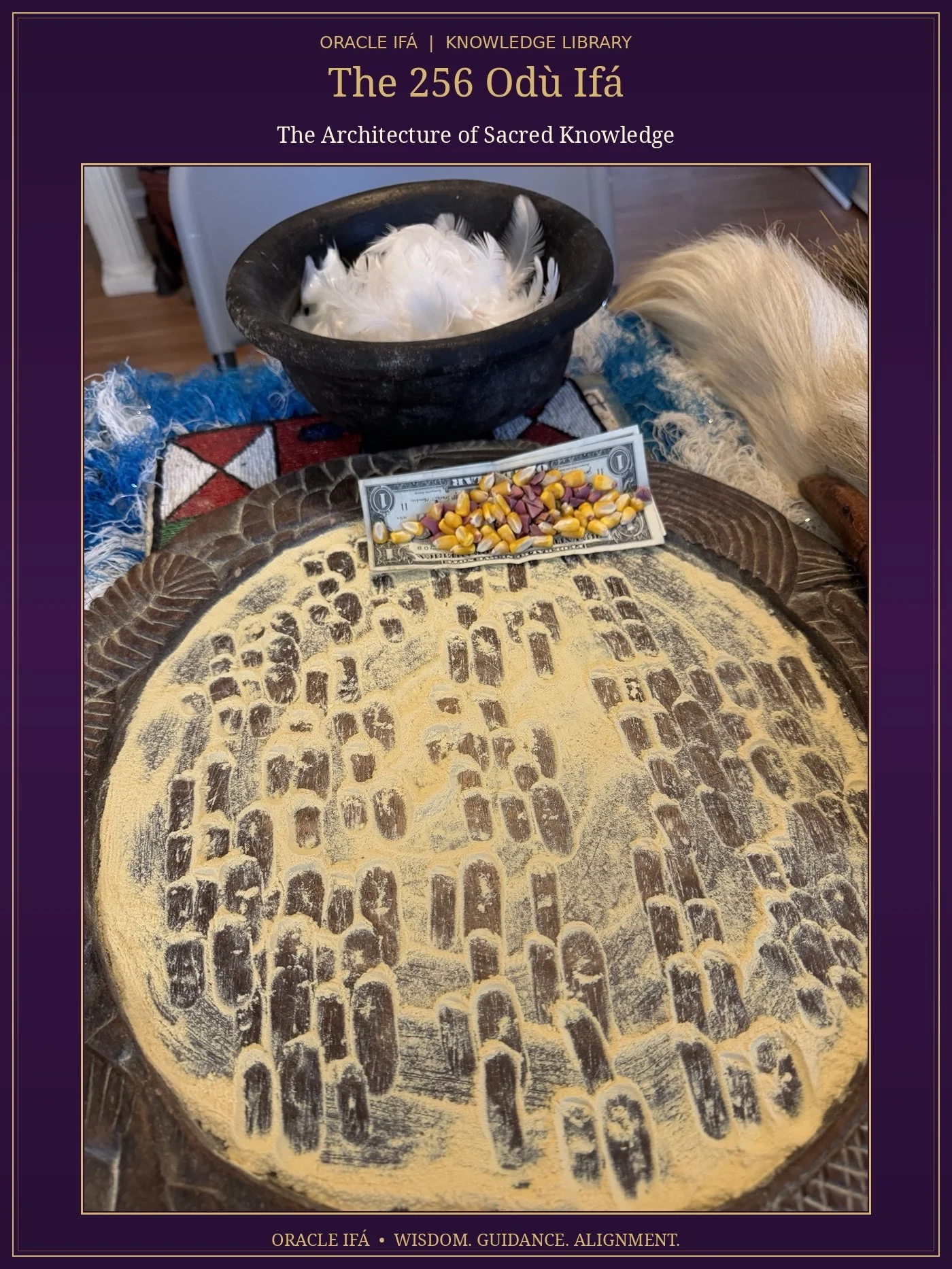
Ọ̀rúnmìlà organized the encoded wisdom of Ifá through a binary system consisting of 256 Odù.
These Odù constitute the structural framework through which the sacred literary, philosophical, and divinatory corpus of Ifá is organized.
The system consists of sixteen principal configurations, commonly referred to as the sixteen Odù Méjì, together with 240 composite configurations.
The resulting 256 Odù provide the organizational foundation of the Ifá corpus.
However, an Odù is considerably more than its visible configuration.
Each Odù encompasses a body of knowledge that may include:
Ẹsẹ̀ Ifá — sacred verses and oral literature.
Narratives concerning human and divine experiences.
Philosophical and moral teachings.
Observations concerning the patterns of human behavior.
Spiritual prescriptions and ritual instructions.
Teachings concerning destiny and personal responsibility.
Knowledge of relationships between humanity, nature, and the spiritual world.
The visible configuration provides access to a much larger body of encoded knowledge.
Within the traditional account presented in my book, Ọ̀rúnmìlà shared aspects of the sacred knowledge he received with the Ìrúnmọlẹ̀.
These divine beings contributed to the development and expansion of particular dimensions of that knowledge, including specialized areas of sacred understanding known as Awo, or mysteries.
Ọ̀rúnmìlà subsequently incorporated these contributions into the greater body of wisdom that we recognize as the corpus of Ifá.
This understanding reveals something particularly important about the nature of Ifá.
It is not simply an isolated collection of prophecies.
It is an interconnected body of sacred intelligence through which numerous dimensions of existence may be understood in relationship to one another.
How Does Ifá Divination Work?
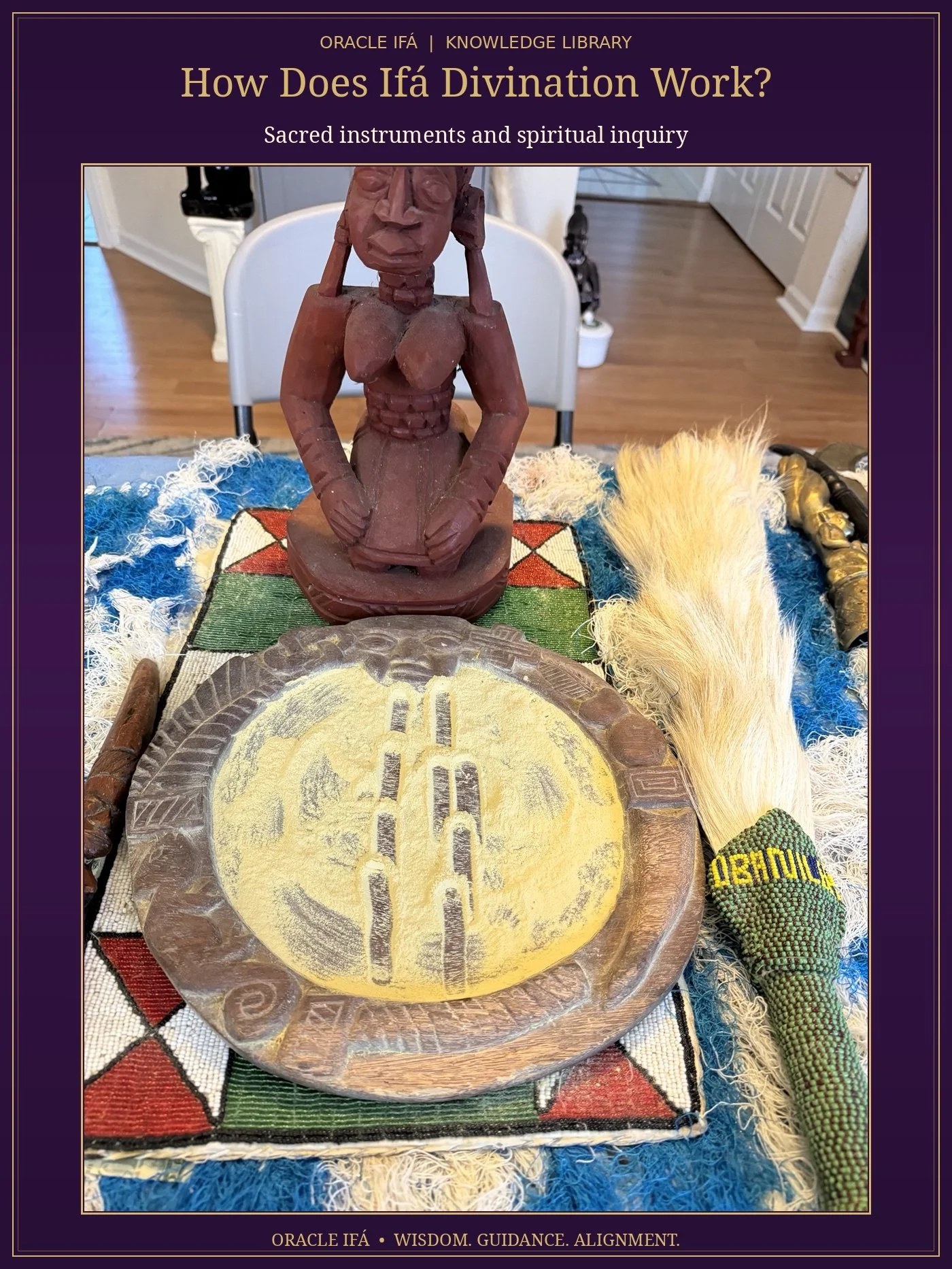
When a person approaches a trained priest of Ifá, they are seeking access to this body of sacred knowledge in relation to their own circumstances.
Through traditional divination, an Odù is revealed.
The priest examines the teachings associated with that Odù and determines their relevance to the individual, the circumstances under consideration, and the spiritual conditions surrounding the inquiry.
The process may illuminate matters that are not immediately apparent to the person seeking guidance.
It may reveal favorable conditions, identify sources of difficulty, provide warnings, recommend particular courses of action, or prescribe spiritual interventions.
The priest may also determine whether the individual is presently encountering conditions associated with Ìrẹ́, favorable circumstances and blessings, or Ìbì, adverse conditions and difficulties.
Further inquiry establishes the nature of those circumstances and how the individual may respond to them.
The significance of divination, however, is not limited to discovering what may happen.
It is equally concerned with understanding what can be done.
A consultation may reveal that a person must reconsider a decision, address an unresolved relationship, cultivate patience, honor a prohibition, perform Ẹbọ, or develop a greater understanding of their own responsibilities.
Two individuals may receive the same Odù and nevertheless receive different guidance.
Their circumstances are different.
Their spiritual constitutions are different.
Their destinies are different.
The Odù must therefore be understood in relationship to the particular individual receiving its message.
The work of the trained priest involves discerning the relationship between the encoded wisdom of Ifá and the actual conditions of a human life.
This is one of the reasons extensive training, practical experience, and the cultivation of character are so important within the priesthood.
Is Ifá About Predicting the Future?
Although Ifá possesses prophetic and divinatory dimensions, reducing its purpose to predicting future events obscures much of its significance.
Ifá concerns the relationships between conditions, choices, actions, consequences, and destiny.
It provides a framework through which an individual may better understand the circumstances presently unfolding within their life and the possible implications of their actions.
Consider a person who repeatedly experiences similar difficulties in their relationships.
The individuals involved may change, yet the underlying pattern remains.
A consultation may help illuminate dimensions of that pattern that the person has not previously recognized.
The guidance may concern spiritual conditions, personal conduct, inherited responsibilities, incompatibilities, or choices that require reconsideration.
Knowing that a difficulty exists is one thing.
Understanding its nature, recognizing one's relationship to it, and receiving guidance concerning how to address it are considerably more valuable.
The purpose of Ifá is not simply to tell us what tomorrow may bring.
It is to assist us in understanding how to live today in relationship to what tomorrow may become.
Orí: The Individual at the Center of Spiritual Practice
Throughout Practical Foundations of Ifá, I repeatedly return to the significance of Orí.
Orí literally refers to the head, but its spiritual meaning extends considerably beyond the physical head.
It concerns the individual's inner spiritual identity, personal Godhead, and relationship with their chosen destiny.
The concept of Orí is central to understanding why spiritual guidance must be individually contextualized.
Within the framework presented in my book, the traditional understanding of destiny includes three important dimensions:
Àkúnlèyàn — the chosen direction, aspirations, and aspects of destiny selected before entering the world.
Àkúnlègbà — the resources, circumstances, and supporting conditions received in relation to that destiny.
Àyànmọ́ — those established or fixed conditions of destiny that form part of the individual's earthly existence.
These distinctions allow us to consider destiny with greater depth.
Not everything we experience belongs to the same category of spiritual circumstance.
Some conditions concern the fundamental structure of our existence. Others concern the resources available to us, the circumstances through which we must navigate, and the decisions we make along the way.
Our relationship with destiny is therefore not adequately understood through passive acceptance or through the assumption that every circumstance can be changed through ritual alone.
It requires discernment.
The individual must come to understand what is being asked of them, what may be cultivated or corrected, and how to live in greater alignment with their Orí.
Spiritual practice should assist the individual in developing this understanding rather than encouraging dependence upon external spiritual authorities for every decision.
The Five Foundations of Ifá Practice
In Practical Foundations of Ifá, I identify five fundamental components through which the practice of Ifá may be understood.
Prayer
Prayer encompasses more than the verbal recitation of sacred words.
It includes intention, mindfulness, reverence, and the conscious orientation of the individual toward spiritual relationships.
Through prayer, we acknowledge the divine, honor our ancestors, attend to our Orí, express gratitude, and articulate our needs.
Prayer also provides an opportunity for reflection upon the manner in which we are conducting our lives.
Divination
Divination provides a structured means of spiritual inquiry.
Within the broader Ifá and Òrìṣà traditions, various methods of divination exist, including:
Obì — divination using kola nuts or other traditionally appropriate materials.
Ẹ̀rìndínlógún — divination using sixteen cowrie shells.
Ọ̀pẹlẹ̀ — the Ifá divining chain.
Ikin Ifá — sacred palm nuts used in Ifá divination.
Each method possesses its own context, protocols, scope, and corresponding requirements of training or authorization.
Divination allows the individual to seek guidance beyond the limitations of immediate personal perception.
Ẹbọ — Sacrifice and Spiritual Prescription
Ẹbọ refers to spiritual prescriptions through which particular circumstances may be addressed, corrected, supported, or enhanced.
Such prescriptions are generally determined through divination and may involve natural materials, food, offerings, economic exchange, and other forms of sacrifice.
Animal sacrifice is also an established component of traditional practice, although not every Ẹbọ requires it.
The concept of sacrifice extends into other dimensions of human existence as well.
Time, effort, service, discipline, and the willingness to relinquish particular habits may also constitute meaningful forms of sacrifice.
It is important to understand that Ẹbọ does not necessarily conclude the individual's responsibilities.
A spiritual prescription may be accompanied by instructions concerning conduct, relationships, decisions, or prohibitions.
The individual must remain attentive to those responsibilities.
Destiny
The recognition of destiny establishes the personal context within which spiritual practice takes place.
Each individual possesses a particular spiritual constitution and relationship with existence.
Consequently, what is beneficial for one person may not necessarily be beneficial for another.
The objective is not to reproduce another person's spiritual journey, but to develop an understanding of one's own.
Èèwọ̀ — Sacred Prohibitions
Èèwọ̀ refers to taboos, prohibitions, and restrictions that may be established through spiritual revelation.
Some prohibitions concern particular foods, activities, substances, environments, or behaviors.
Others may concern the manner in which an individual conducts their relationships or responds to particular circumstances.
These restrictions must be understood within their appropriate spiritual and personal context.
A prohibition established for one individual should not automatically be imposed upon everyone else.
Together, these five components demonstrate that Ifá practice is not confined to ceremonies or occasional consultations.
It is a continuing relationship between spiritual understanding and the conduct of everyday life.
Must You Be Initiated to Practice Ifá?
No.
One of the misunderstandings that often arises among individuals newly encountering Ifá is the assumption that meaningful spiritual participation requires immediate initiation.
A person may begin developing a relationship with the teachings of Ifá through study, prayer, ancestral reverence, reflection, and the cultivation of character.
Within the framework presented in my handbook, the daily practice of an individual who has not received particular initiations or corresponding spiritual empowerments remains primarily within the areas of prayer, non-life-force offerings, and appropriate forms of basic divination.
Certain practices require specialized training, consecration, initiation, or authorization.
These distinctions should be respected.
However, they should not be interpreted to mean that an individual is incapable of developing a meaningful spiritual life before receiving such ceremonies.
Initiation is not a substitute for understanding.
Nor should the accumulation of consecrated objects become the sole measure of spiritual development.
The decision to receive the Hand of Ifá, Ìṣẹ̀fá, or to pursue further initiation should emerge through appropriate spiritual inquiry, understanding, and the individual's particular circumstances.
Not everyone is required to follow an identical path.
One Sacred Wisdom, Many Cultural Expressions
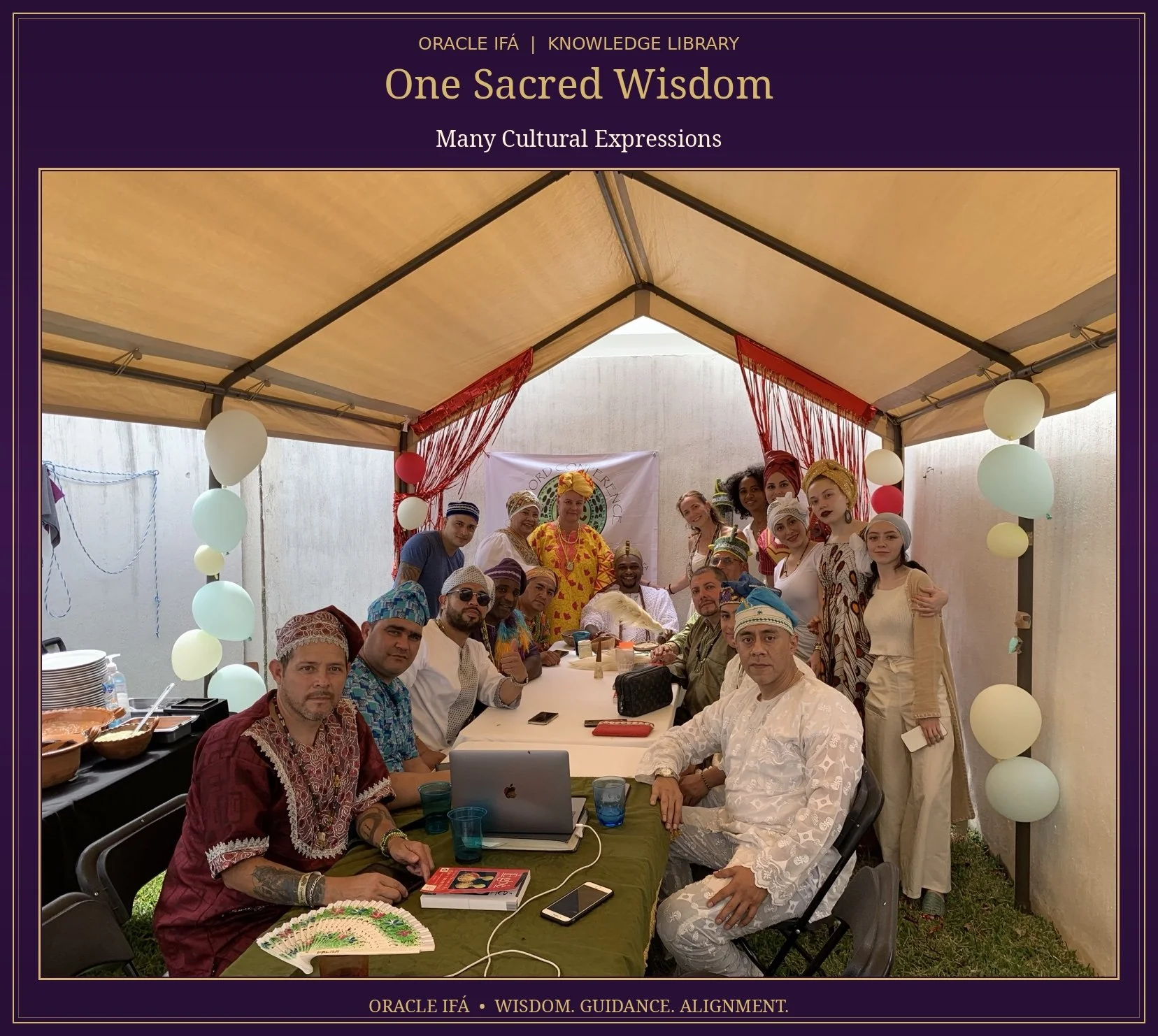
During my thirty journeys to Nigeria, one of the most significant observations I made was the extraordinary diversity of expressions that exist within Ifá and related spiritual traditions.
Even something as fundamental as the organizational order of the 256 Odù beyond the first sixteen may differ between lineages.
Some schools employ what is commonly referred to as the descending or binary method.
Others employ what is referred to as the square method.
Both systems recognize the 256 Odù, yet their methods of organizing, identifying, and ritualizing their relationship with those Odù may differ.
Such variations may exist between regions, towns, temples, lineages, and even individual families.
Some families maintain relationships with particular Òrìṣà whose worship is preserved within their own hereditary traditions.
Beyond the Yorùbá cultural sphere, related divinatory traditions are found among numerous West African peoples, including Afá among the Ewe and certain Igbo communities, Fa among the Fon, Iha among the Edo-Bini, and Eva among the Nupe.
These traditions possess their own cultural identities, histories, and methods of expression.
The transatlantic enslavement of African peoples subsequently brought numerous African religious traditions into new geographical and cultural environments.
Across Cuba, Brazil, Haiti, Trinidad and Tobago, Venezuela, and elsewhere, African spiritual knowledge was preserved, adapted, and reorganized under profoundly difficult historical circumstances.
Lucumí Ifá, Santería, Candomblé, Vodou, Umbanda, Hoodoo, and other African-derived traditions reflect different aspects of this broader history of preservation and adaptation.
They should not all be understood as interchangeable names for Ifá. Each possesses its own historical development, spiritual foundations, and cultural identity.
What their existence illustrates is the remarkable capacity of African sacred knowledge to endure, adapt, and develop across generations and environments.
Ifá is not merely a religion in isolation.
It also exists within a wider network of religious and cultural traditions.
The Myth of the One True Ifá
While traveling throughout Nigeria and meeting priests from different schools of Ifá, I encountered something both fascinating and instructive.
Practitioners representing different methods and lineages would sometimes insist that their particular approach constituted the only correct way to practice Ifá.
Yet these individuals frequently differed from one another in their methods, interpretations, ritual procedures, and organizational structures.
Each maintained a relationship with the same sacred corpus.
Each possessed inherited knowledge and spiritual authority within their respective communities.
And each could demonstrate aspects of the efficacy of their own practice.
The existence of numerous distinct expressions, each presenting itself as the exclusive authentic expression, creates an obvious philosophical paradox.
There cannot be multitudes of different exclusive versions of the One True Ifá.
What these experiences impressed upon me was that Ifá exists simultaneously as a universal practice and a profoundly personal one.
The diversity of its expressions does not necessarily constitute a departure from its essence.
In many instances, that diversity reflects the manner in which sacred knowledge has been contextualized within particular environments, cultural histories, families, and relationships.
The different lineages may operate independently while remaining connected through shared principles, spiritual relationships, and bodies of knowledge.
They are parallel yet interconnected.
Understanding this allows us to appreciate differences without immediately interpreting them as contradictions or deficiencies.
It also allows us to preserve the integrity of our own inherited traditions without requiring the invalidation of everyone else's.
Ìṣẹ̀ṣe: Honoring the Foundations of Your Own Existence
One of the most important teachings I discuss in Practical Foundations of Ifá concerns the significance of Ìṣẹ̀ṣe.
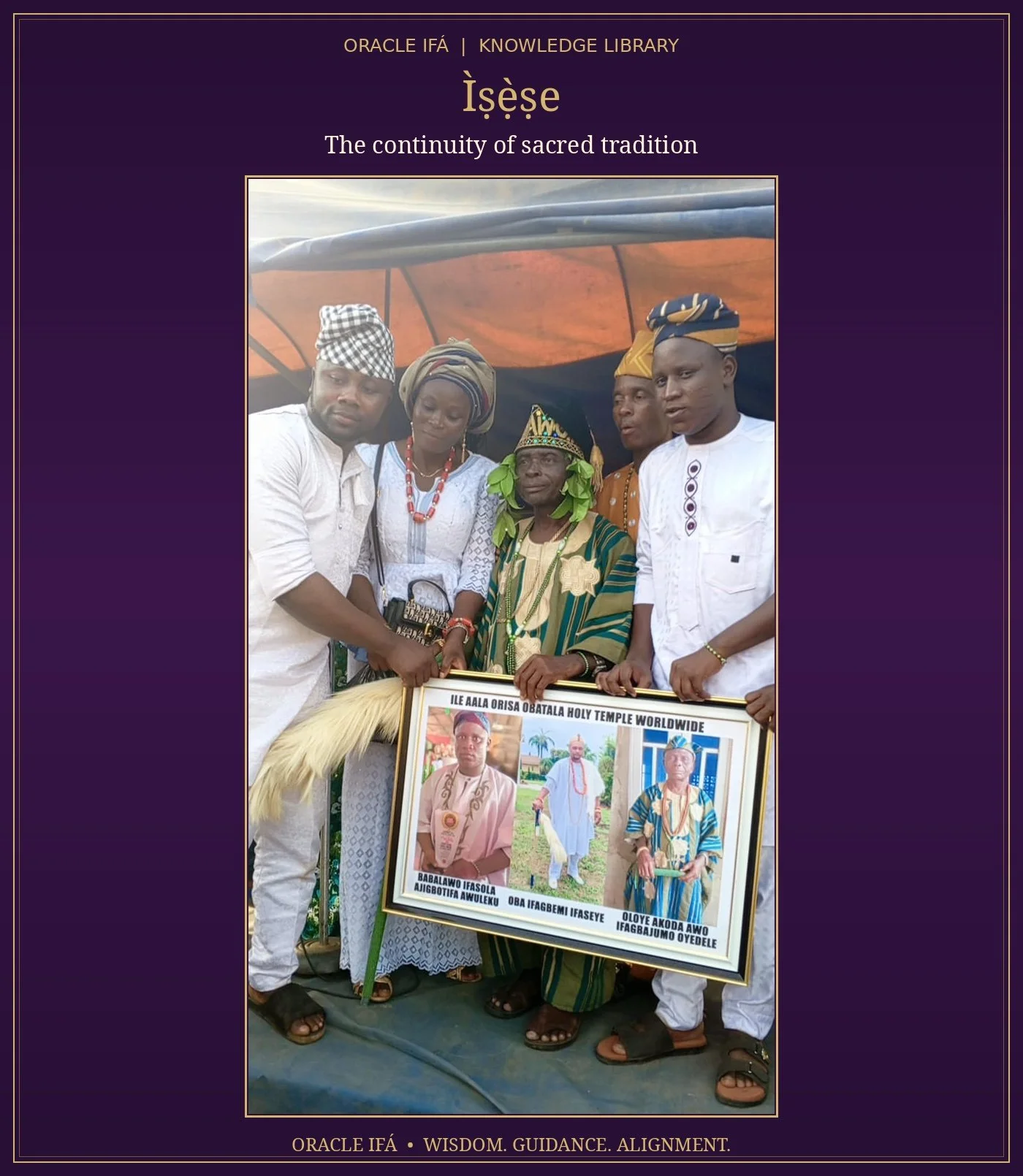
Although the term is commonly translated as tradition, its spiritual implications extend into the foundations through which an individual's existence has become possible.
In the Odù of Ogbè Ìròsùn, we encounter teachings identifying Olódùmarè, one's father, one's mother, one's Orí, and one's family among the foundations of personal tradition.
These teachings emphasize the importance of honoring one's own origins and the relationships through which one has entered the world.
The implication is profound.
A person does not need to abandon their own ancestral identity in order to establish a meaningful relationship with Ifá.
Nor does the recognition of Yorùbá spiritual wisdom require the erasure of one's existing cultural inheritance.
For individuals of African descent throughout the Diaspora, this distinction is particularly important.
The ancestors of African-descended populations in the Americas came from numerous cultural and ethnic groups across West and West-Central Africa.
Their collective inheritance cannot be reduced exclusively to a single contemporary ethnic identity.
To approach African spirituality through the assumption that one must become culturally identical to another people may inadvertently contribute to the very loss of identity that one is seeking to heal.
The objective should be integration rather than erasure.
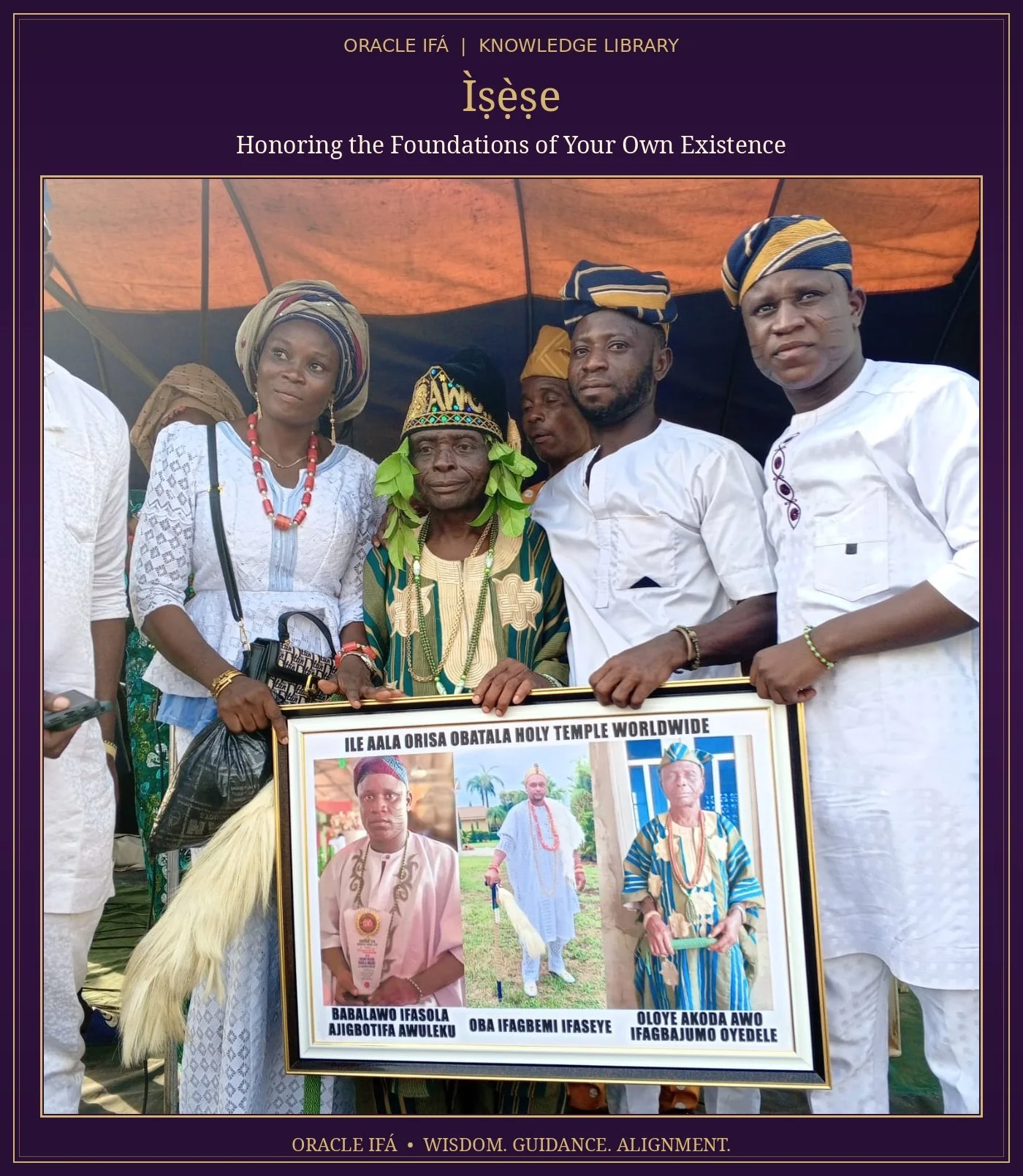
Ifá provides an opportunity to deepen one's understanding of existence while honoring the foundations through which one's own life has emerged.
Preserving the Essence While Allowing the Tradition to Grow
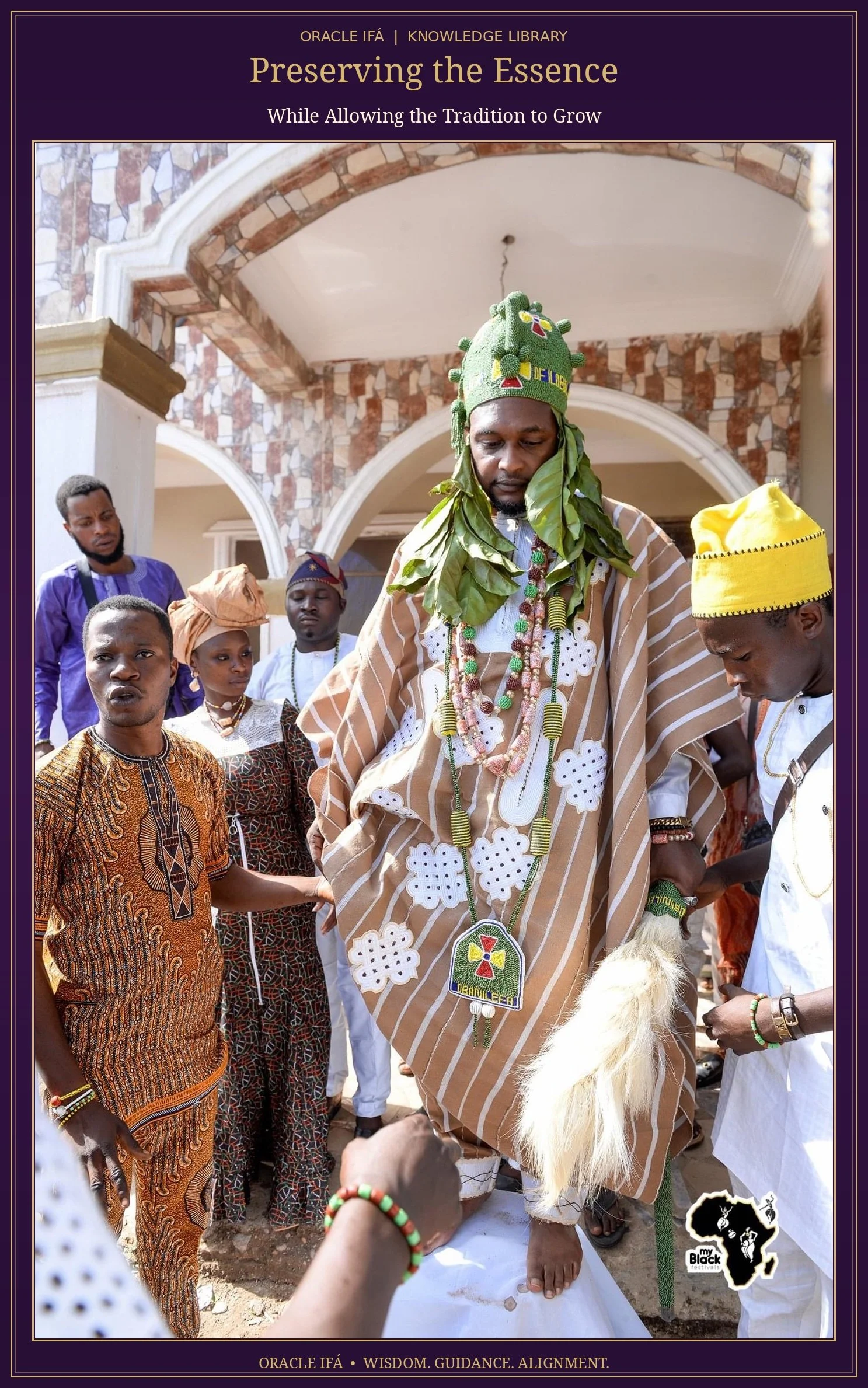
During one of my visits to Ọ̀yọ́ Aláàfin, I discussed these matters extensively with one of my teachers.
His guidance profoundly influenced my understanding of the responsibility of transmitting Ifá beyond its immediate West African cultural environment.
Paraphrasing his words, he explained that the elders of Ifá in Africa had inherited sacred knowledge from their own masters through generations of oral transmission.
However, their interpretation of the world was necessarily informed by the environments and experiences through which they had lived.
Those of us who came from other parts of the world brought our own cultural experiences, inherited knowledge, and understanding.
Our responsibility was to establish a bridge between these bodies of experience.
We were to preserve the essence and integrity of the teachings while learning how to apply them meaningfully within the environments in which we lived.
As he explained, our Ifá might look and sound different from his, yet remain Ifá, because we are all children under heaven.
This teaching continues to inform my work.
The preservation of sacred knowledge does not require that every expression of that knowledge remain outwardly identical.
It requires that we understand the principles sufficiently well to preserve their integrity while allowing them to function within changing circumstances.
A living tradition must possess the capacity to respond to life.
Its ability to adapt responsibly does not necessarily indicate a loss of authenticity.
It may demonstrate the depth and continuity of its wisdom.
Ìwà Pẹ̀lẹ́: The Moral Foundation of Ifá
We return here to the definition with which this article began.
Ifá is a system of morality veiled by allegory.
The moral dimension of Ifá cannot be separated from its spiritual and ritual dimensions.
Ìwà, character, and Ìwà Pẹ̀lẹ́, gentle or well-cultivated character, are fundamental to the development of a meaningful spiritual practice.
A person may possess extensive ritual knowledge and still require considerable development in the manner in which they conduct themselves.
They may know numerous prayers while failing to honor their commitments.
They may possess consecrated spiritual objects while behaving irresponsibly toward others.
They may receive titles and positions of authority while lacking the discernment necessary to exercise that authority appropriately.
Spiritual development must therefore be reflected in the substance of one's life.
How do we respond when we encounter disagreement?
How do we behave when circumstances do not unfold according to our expectations?
Do we honor our responsibilities?
Are we capable of acknowledging and correcting our own mistakes?
Can those who depend upon us rely upon our word?
These questions are not separate from spiritual practice.
They are among the circumstances through which the teachings of Ifá become embodied.
The sacred narratives of Ifá provide opportunities to examine the complexities of human behavior, the consequences of our choices, and the qualities necessary to navigate existence with wisdom.
The allegory becomes meaningful when we recognize its relationship to our own lives.
Knowledge becomes wisdom when it informs our conduct.
Ifá and the Cultivation of Human Flourishing
The relationship between Ifá and human existence extends beyond the resolution of immediate spiritual difficulties.
Within the teachings of Ifá, we encounter numerous dimensions of well-being and favorable existence.
These include longevity, prosperity, meaningful relationships, family, peace, spiritual development, and the fulfillment of one's responsibilities.
Yet the realization of these conditions must be understood in relationship to the individual and their particular destiny.
What constitutes a meaningful and successful life for one person may differ considerably from what constitutes such a life for another.
The objective is not simply the accumulation of material resources, religious titles, or spiritual objects.
It is the development of a life in which the individual's understanding, conduct, spiritual relationships, and circumstances may come into greater harmony.
The practice of Ifá invites us to examine not only what we desire, but also whether those desires are consistent with the nature of our existence.
It invites us to consider the responsibilities accompanying the blessings we seek.
In this sense, Ifá concerns both the development of the individual and the quality of the relationships through which that individual participates in the wider world.
Human flourishing is not exclusively an individual accomplishment.
It is also relational.
Closing Reflection: Ifá as a Living Relationship With Divine Wisdom
What, then, is Ifá?
Ifá is the encoded message of Olódùmarè for all of humanity.
It is a sacred corpus organized and transmitted through the wisdom of Ọ̀rúnmìlà, expressed through 256 Odù, and preserved through generations of teachers, priests, families, and spiritual communities.
It is a system of morality, philosophy, divination, spiritual inquiry, and practical understanding.
It concerns destiny, character, the nature of existence, and the relationships through which human life unfolds.
It is universal in its significance while remaining deeply personal in its application.
Its wisdom does not require the abandonment of one's identity.
Rather, it invites the individual to develop a more profound understanding of who they are, the foundations of their existence, and the responsibilities accompanying their journey through life.
Ifá does not simply provide answers.
It teaches us to understand the nature of our questions.
It does not merely illuminate the circumstances surrounding our lives.
It invites us to examine our relationship with those circumstances.
It does not remove the responsibility of living.
It provides wisdom through which that responsibility may be carried with greater understanding.
The significance of Ifá is therefore not found exclusively in what it reveals concerning the future, but in what it teaches us concerning the nature of existence and how we may live within it.
It is a continuing relationship between divine wisdom and the unfolding human experience.
And that relationship remains available for sincere inquiry, reflection, and responsible development throughout one's lifetime.
Ifá is not simply something we consult. It is something we come to understand, something we learn to embody, and something through which we may come to know ourselves more deeply.
Begin Your Inquiry Through Ifá
Whether you are encountering Ifá for the first time, seeking spiritual clarity, exploring your relationship with Orí and the Òrìṣà, or attempting to understand recurring patterns within your life, a traditional Ifá consultation provides an opportunity to begin that inquiry.
Through Oracle Ifá, individuals may receive private consultations, explore the traditional reception of the Hand of Ifá (Ìṣẹ̀fá), and develop a deeper understanding of the sacred foundations of Ifá and Òrìṣà practice.
Private Ifá Consultations | Hand of Ifá (Ìṣẹ̀fá) | Traditional Spiritual Guidance
Continue Your Study
Primary Authorial Reference
Babatunde, Oba Ifagbemi Faseye. Practical Foundations of Ifá: A Handbook of Ifá View and Practice. Oracle Ifá Press. First edition, 2022; second-edition review manuscript, 2026.
Relevant chapters include Introduction, What Is Ifá?, What Is Pluralism?, Ẹbọ, Èèwọ̀, Orí, The Role of Orí, Ìwà Pẹ̀lẹ́, and Cultivating a Successful Practice.
Oracle Ifá — Wisdom. Guidance. Alignment.