
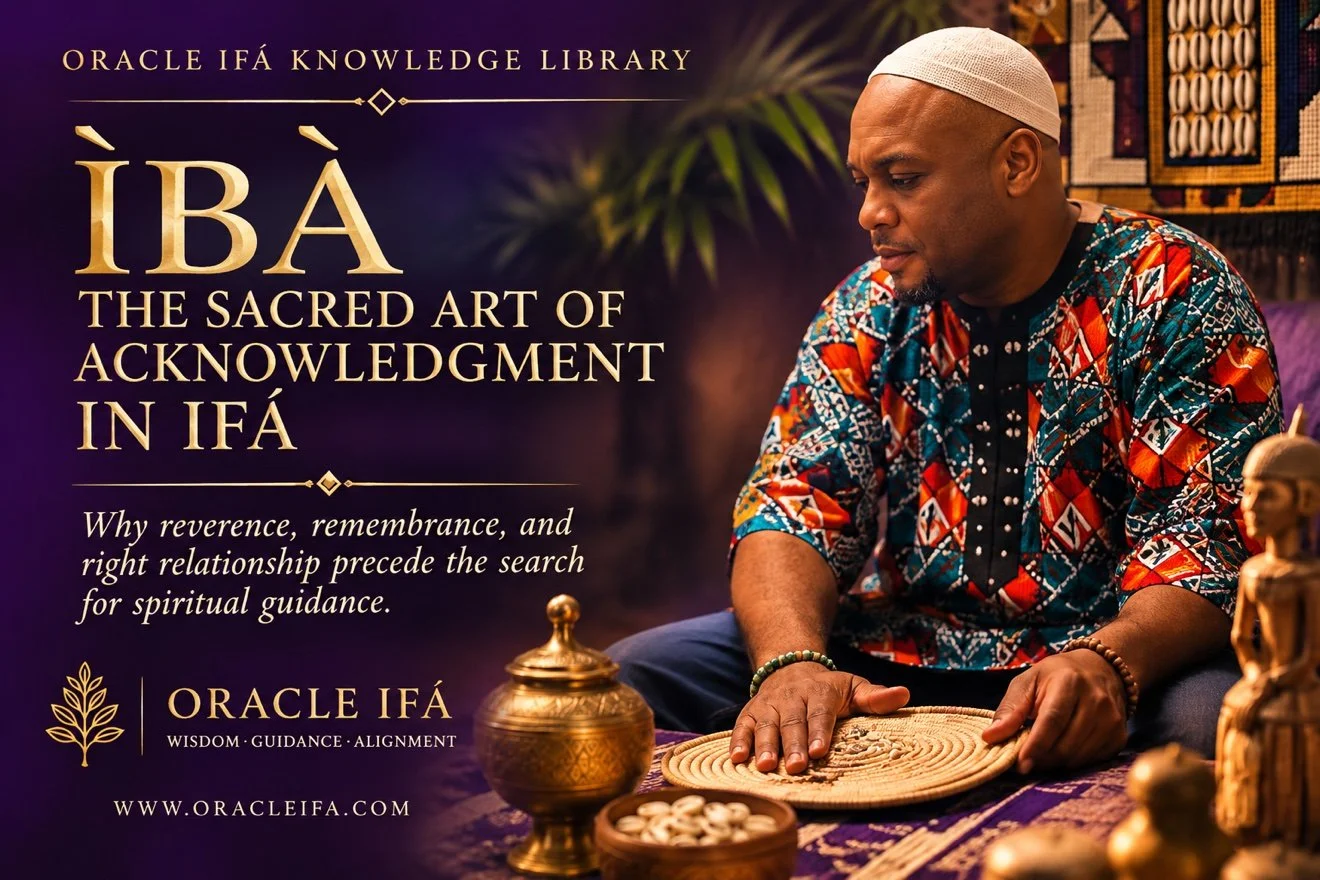
Why reverence, remembrance, and right relationship precede the search for spiritual guidance
By Prof. Dr. Oba Ifagbemi Faseye Babatunde, PhD; ND
Oracle Ifá Knowledge Library | November 13, 2026
Before We Ask, We Acknowledge
In the sacred tradition of Ifá, approaching wisdom is not simply a matter of presenting a question and waiting for an answer. There is also the question of how we approach that wisdom, what we acknowledge, and the relationship we maintain with the sources from which our lives have emerged.
This is one of the deeper meanings we may contemplate through Ìbà: the act of paying homage, offering respect, and recognizing those whose presence and contributions precede our own.
In a world that often prizes immediate answers, Ìbà reminds us that knowledge exists within relationship.
Remembrance as Spiritual Responsibility
To acknowledge those who came before us is not merely to remember names. It is to recognize that our lives are situated within histories, communities, teachings, and obligations.
Within the living practice of Ifá, reverence may be expressed toward Olódùmarè, Òrúnmìlà, the Òrìṣà, the ancestors, and the elders who preserve and transmit sacred knowledge, according to the lineage and occasion.
Such acknowledgment is not intended to diminish the individual. Rather, it offers a way of understanding the individual as part of something greater. One does not arrive at wisdom entirely alone.
The Difference Between Asking and Being Prepared to Receive
A person may seek divination because of uncertainty concerning family, livelihood, relationships, or spiritual direction. Yet the quality of spiritual engagement involves more than the urgency of the question.
Are we willing to listen? Are we prepared to consider guidance that challenges our assumptions? Can we recognize the distinction between what we desire and what may be appropriate for our circumstances?
These questions invite reflection rather than judgment. The practice of reverence can encourage a disposition of attentiveness, humility, and responsibility. It does not guarantee a particular answer or outcome.
Ìbà and the Continuity of Tradition
Ifá is sustained through living transmission. Its teachings are preserved not only through written records but through language, recitation, disciplined learning, ritual practice, and the relationships between teachers and students.
Ìbà offers an opportunity to recognize this continuity. When we acknowledge our elders and predecessors, we also recognize the responsibility of preserving knowledge faithfully rather than reshaping it merely for convenience.
Respect for tradition includes knowing the limits of our understanding and recognizing when deeper instruction is necessary.
Bringing Reverence Into Daily Life
The spirit of acknowledgment need not be confined to formal religious occasions. It can inform the way we speak to elders, honor commitments, receive correction, remember family histories, and approach decisions affecting others.
These everyday expressions do not replace prescribed traditional observances. They offer practical opportunities to cultivate the qualities of respect and responsibility that give spiritual learning enduring meaning.
Closing Reflection
Before seeking what comes next, there is wisdom in remembering what has brought us here. Ìbà invites us to recognize the relationships, sacrifices, teachings, and responsibilities that make our lives possible.
Within that acknowledgment, the search for guidance becomes more than a request for an answer. It becomes an encounter with continuity, responsibility, and sacred relationship.
For those seeking personal guidance through Ifá, an individual consultation provides an opportunity to explore the questions and circumstances particular to their lives.